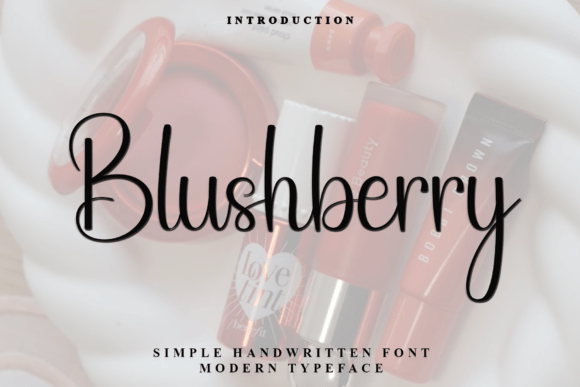
Blushberry: A Handwritten Script Font with a Modern Twist
There’s a particular quality in design that feels both intimate and polished. It’s the difference between a generic sign-off and a signature that carries weight. This is the space Blushberry occupies. At its core, it’s a script font, but it avoids the common pitfalls of looking either too childish or overly formal. The handwritten font style is immediately apparent, with fluid strokes that mimic the natural pressure and flow of a real pen. Yet, there’s a modern typography sensibility at play—the letterforms are consistent, the connections between characters are deliberate, and the overall rhythm feels contemporary. It’s this blend of casual charm and refined execution that gives the typeface its unique personality.
Where Blushberry Truly Shines
Think of Blushberry as a specialist, not a generalist. It’s a display font meant for impact in specific contexts. Its strength lies in evoking emotion and personality, making it a powerful tool in your design assets kit for the right project. It’s not the font for your body copy in a technical manual, but it’s exceptional for creating a focal point.
In brand identity, it can become the heart of a logo for a boutique bakery, a wedding planner, a handmade jewelry line, or a lifestyle coach. The font’s warmth builds immediate connection. For packaging design, imagine it on a artisanal candle label or a small-batch skincare product—it communicates care and craftsmanship. In editorial design, it works beautifully for pull quotes in a magazine, chapter titles in a cookbook, or headers on a blog about home decor or personal development.
The digital realm is where its versatility expands. Web design can leverage it for hero section headlines, call-to-action phrases, or special announcement banners. For social media graphics, it’s perfect for Instagram quotes, Pinterest pins promoting a workshop, or Facebook ads for a local event. The key is using it strategically to draw the eye and convey a specific, heartfelt tone.
Making Informed Design Choices with a Script Font
Choosing a creative font like this requires more than just liking how it looks. You need to evaluate its fit and understand its behavior. Here’s a practical framework for working with Blushberry or any similar premium font.
Evaluate the Project’s Voice: Does your project need to feel approachable, personal, and stylish? Or does it need to feel corporate, minimalist, and authoritative? Blushberry excels in the former. It’s ideal for projects targeting an audience that values authenticity and aesthetic appeal, like the readers of a lifestyle blog or the clients of a bespoke service.
Test Readability and Hierarchy: The most beautiful script font fails if it’s illegible. Always test Blushberry at the intended size and on the intended background. Its natural curves are generally legible at display sizes, but avoid using it for long sentences or small text. Use it for short, impactful phrases. Pair it with a clean sans serif font or a sturdy serif font for body text to create a clear visual hierarchy. A good font pairing provides contrast—let the sans serif handle the mundane information while Blushberry delivers the emotional punch.
Understand the Licensing: If you’re using this for a client project, a product for sale, or commercial marketing materials, you need to verify the license. A true commercial font will come with clear terms that allow for this use. Don’t assume; read the license agreement to ensure you’re covered for logo design, merchandise, or digital ads. This is a non-negotiable step for professional work.
Observe Its Nuances: Spend time with the font files. A well-crafted handwritten font like Blushberry often includes stylistic alternates, ligatures, or swashes. These are alternate character forms that can add even more custom flair to your designs. Experimenting with these features can help you create a more unique and tailored look, preventing your design from looking like a simple template.
Ultimately, a font is a tool for communication. Blushberry